Music Branding and the Affective Impact of Sound
Music Branding is the creation and management of a brand’s music: composing, selecting, and curating the tracks that translate a company’s personality into sound. It is part of sound marketing, the umbrella that brings together Sound Branding, Music Branding, and Sound UX. Each discipline handles a different layer. Sound Branding defines the sonic identity, Sound UX organizes the sounds of interfaces and products, and Music Branding works on the most affective layer, the layer of songs, repertoires, and playlists, where melody, rhythm, and memory live.
On the subject, Zanna (CEO of Zanna Sound) describes the brand’s sound as “an identifier that creates recognition, affection, and connection, and increases results.” The statement sums up what music does for a brand when treated as strategy.
Why does music move us?
Swedish psychologist Patrik Juslin and researcher Daniel Västfjäll published in 2008, in the journal Behavioral and Brain Sciences, one of the most cited papers on the subject. They describe mechanisms through which music triggers emotion, including brainstem reflex, emotional contagion, episodic memory, and evaluative conditioning. In simple terms, evaluative conditioning happens when a piece of music appears repeatedly alongside a pleasant situation and begins to trigger the same pleasure on its own. Episodic memory makes a song transport a person back to the day they first heard it.
For a brand, this changes the conversation. The consistent repetition of a musical universe builds, over months, an emotional association that belongs to that brand alone. That is why Music Branding requires constancy and planning, and rarely works as a playlist put together the night before a grand opening.

Moods: the emotional tone a brand chooses to offer
A mood is the emotional state an environment is meant to evoke: calm, energy, warmth, sophistication, celebration. In music branding, moods are defined before any music is selected, based on the brand’s personality and what each moment of the customer journey calls for. A café in the morning, an office at three in the afternoon, and a store on a busy Saturday each call for a different atmosphere.
Research shows how the musical atmosphere changes concrete behaviors. In 1982, professor Ronald Milliman published in the Journal of Marketing a study conducted in a supermarket. With slow music, customers walked more slowly through the aisles and daily sales were roughly 38% higher than on days with fast music. The tempo of the song set the pace of the people.
Professor Charles Spence of the University of Oxford reports in his book Sensehacking that the Chipotle chain controls the tempo of music in its restaurants, with faster tracks during peak hours to speed up the lines. The same approach that slows a supermarket down speeds up a fast-casual restaurant, and the choice depends on the goal of the environment.
Another classic experiment came from the University of Leicester. Adrian North, David Hargreaves, and Jennifer McKendrick played, on alternate days, French accordion music and German brass band music next to a shelf stocked with French and German wines of similar price and flavor. On French music days, more French wines were sold. On German music days, the reverse happened, and roughly three-quarters of sales matched the soundtrack. In the questionnaires, customers showed no awareness of the influence. The study was published in 1999 in the Journal of Applied Psychology.
The authors themselves make an honest caveat. North and Hargreaves note that it is unlikely someone would buy a Ferrari instead of a Porsche because they heard Vivaldi. Music acts most strongly on low-involvement decisions and on the feeling of being in a space, which is precisely the territory of experience.
Software: where music strategy becomes routine
Defining moods is half the job. The other half is making the right music play at the right time, in every location, every day, and within the law. This is where business music platforms come in. Soundtrack Your Brand, a Stockholm-based company that started as Spotify for Business, is a well-known example. It offers a catalog licensed for commercial use, playlists organized by business type and mood, time-based scheduling, and centralized control of multiple locations from a single dashboard.
"Music is a universal language, but business is local"
Commercial use requires its own licensing. The terms of service for personal streaming platforms typically do not cover playback in commercial spaces, and in Brazil, music played in commercial venues usually involves royalty collection by Ecad. A specialized platform reduces that risk and frees the team to focus on what matters.
Technology delivers scale, and artistic direction delivers meaning. Zanna highlights the need to train marketing and brand teams to “apply sound consistently across every sonic touchpoint.” The software distributes the music, and trained people ensure it keeps speaking the same language as the brand.
Key industry terms
A few words come up in every conversation about the subject.
- Sound Branding is the study and creation of a brand’s sonic identity.
- Sound Production is the application of that sound, including UX, across every touchpoint.
- Sound Guardianship is the maintenance, consistency, and team training over time.
- Music Branding is the curation and musical creation within that framework.
Outside Brazil, you will also find Audio Branding and Sonic Branding as equivalents of Sound Branding.

Affective impact: how do you measure what people feel?
Affect may seem difficult to measure, but there are practical ways to do it. The idea is to revisit the brand after one or two years of implementation to assess the impact of sound on results. Good indicators include dwell time, average ticket size, customer satisfaction, brand recall, and employee morale, since staff also hear the soundtrack all day long. Comparing periods, or locations with and without the new repertoire, shows what the music is delivering.
How to start a Music Branding project
- Describe the brand’s personality in a few words: warm, bold, serene, sophisticated.
- Translate that personality into moods for each time of day and each touchpoint.
- Build the repertoire with curation and original compositions on a licensed platform.
- Train the teams to apply sound consistently.
- Measure the results and adjust the repertoire over time.
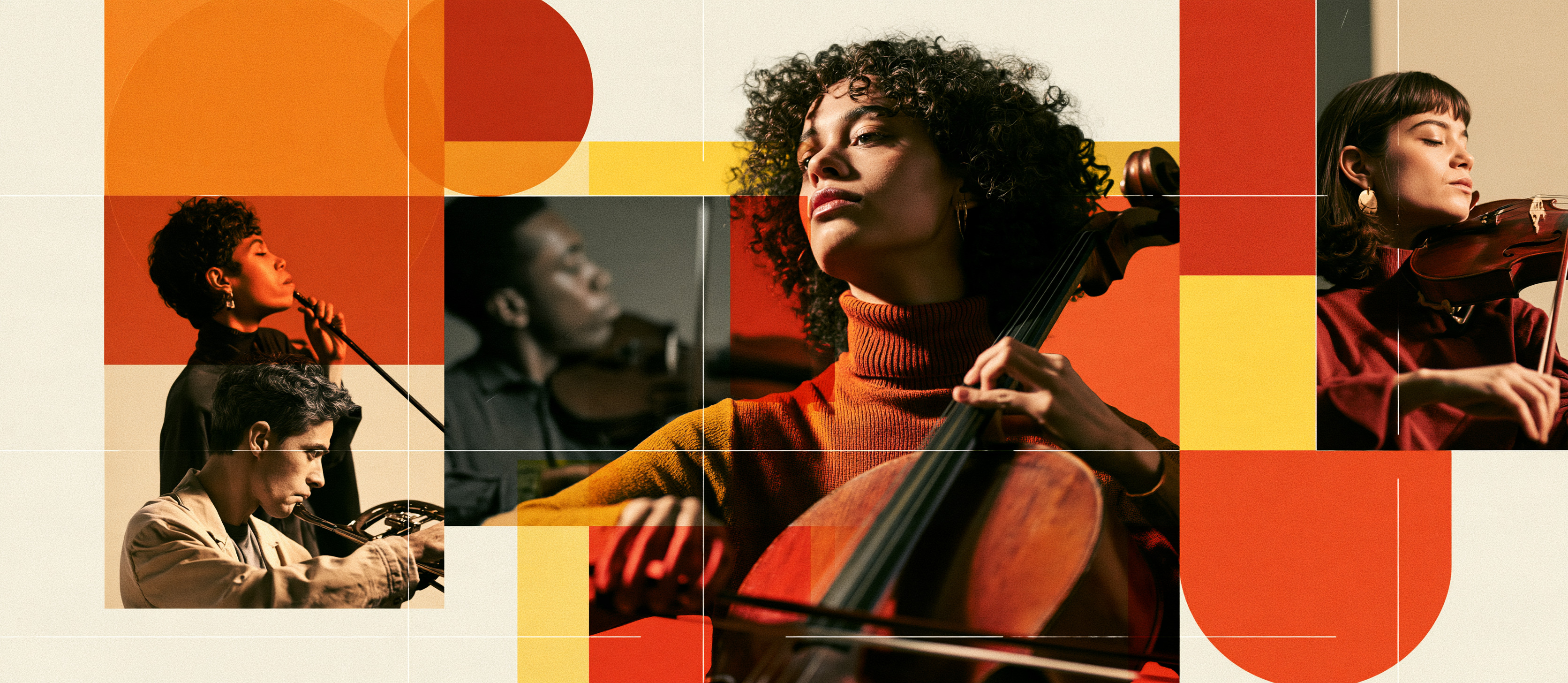
Music with intention
A brand already communicates through what it shows and what it says. With Music Branding, it also communicates through what it makes people feel while they are with it. Music with intention makes the environment more human, the experience more memorable, and the relationship more lasting. If your brand is ready to be heard with that clarity, Zanna Sound can design that path with you.
Want to find out which mood fits your brand? Talk to the Zanna Sound team and start with a sonic audit.

Next article
Sound Branding and the Art of Music
How Sound Branding grows stronger when an agency combines brand strategy, art, and the experience of a Latin Grammy-nominated artist, Zanna.
Read more