Immersive Sound Experience: The New Sensory Retail
Mizuno set up a pop-up store in São Paulo where customers listened before they bought. Alongside the brand’s collections, the space featured vinyl curation, live DJs, and objects that produced sound when touched. The project appears in the Trend Radar 2026, by the agency Soho Experiential, as an example of community-driven retail.
Sensory retail in 2026 follows that direction, treating physical space as a stage for complete experiences. Sound is part of that composition and is often the least planned element, even though it is one of the senses that reaches whoever walks in the fastest.
What is sensory retail, and why was sound left behind?
Sensory retail is the practice of designing a store for all of the customer’s senses, with light, scent, texture, and sound working together. The concept has had a formal name since 1973, when professor Philip Kotler published in the Journal of Retailing the article that coined the term atmospherics.
For Kotler, atmosphere is the “conscious design of space to create certain effects in buyers.” More than five decades later, layout and lighting have earned their own briefs and budgets. Sound, in many stores, is still a playlist open on an app.
Charles Spence, professor of experimental psychology at the University of Oxford and author of the book Sensehacking, observes that eyes and ears are already overloaded nearly all the time, by screens, ads, and notifications, while touch, taste, and smell receive little stimulation.
For the sound design of a store, that means the customer arrives with their ears already full and needs to find a soundscape composed for that space, that brand, and that moment. Spence sums up the size of the opportunity in one sentence: retailers “are crazy not to think about sound.”
What has research measured inside stores?
In 1982, researcher Ronald Milliman published in the Journal of Marketing an experiment conducted in a supermarket. On days with slow music, around 72 beats per minute, customers moved more slowly and sales volume was 38.2% higher than on days with fast music. Dwell time is still one of the central metrics for physical retail today.
In 1999, Adrian North, David Hargreaves, and Jennifer McKendrick played French and German music on alternate days in front of a wine shelf. With French music, French wines outsold German ones; with German music, the result reversed.
In a summary by researcher J. Scott Armstrong, French wine sold about five times more than German wine on French music days, and German wine sold about twice as much on German music days. On top of that, 86% of customers said the music had not influenced their choice. The effect appears when sound is congruent with the product and acts without being noticed.
A more recent case comes from airport retail. At Glasgow Airport, the consultancy The Sound Agency introduced birdsong in the shopping area, which slowed passengers down and boosted sales by up to 10%, according to a report by The Grocer.
A survey from August 2026, commissioned by the platform Faire among UK consumers, shows public perception: 83% say they notice immediately whether a store has taken care of its environment, 87% would stay longer, and 73% would spend more than planned in such a store. Loud music is the second biggest factor driving customers away, cited by 53%. Because this is a perception survey conducted on commission, it indicates what consumers say they feel. The field experiments above indicate what they actually bought.
How does the customer experience a store with and without sound design?
Consumer psychology professor Cathrine Jansson-Boyd states that most shoppers form an opinion about a store in about 20 seconds, often without realizing it. In that interval, the customer has not yet read a price tag. They have already heard the environment.
Without a sound design project, what reaches the ear is a random mix of generic playlist, HVAC noise, checkout beeps, and backstage conversations. With a project, every layer has a function: the volume allows conversation, the tempo matches the desired flow of foot traffic, and the music selection speaks to what is on the shelves.
North’s study shows why this difference rarely becomes an explicit complaint. The customer attributes the result to the brand, the product, or the service. They say they liked the store, felt at ease, that the place had atmosphere.
Cognitive rest: the new luxury of retail
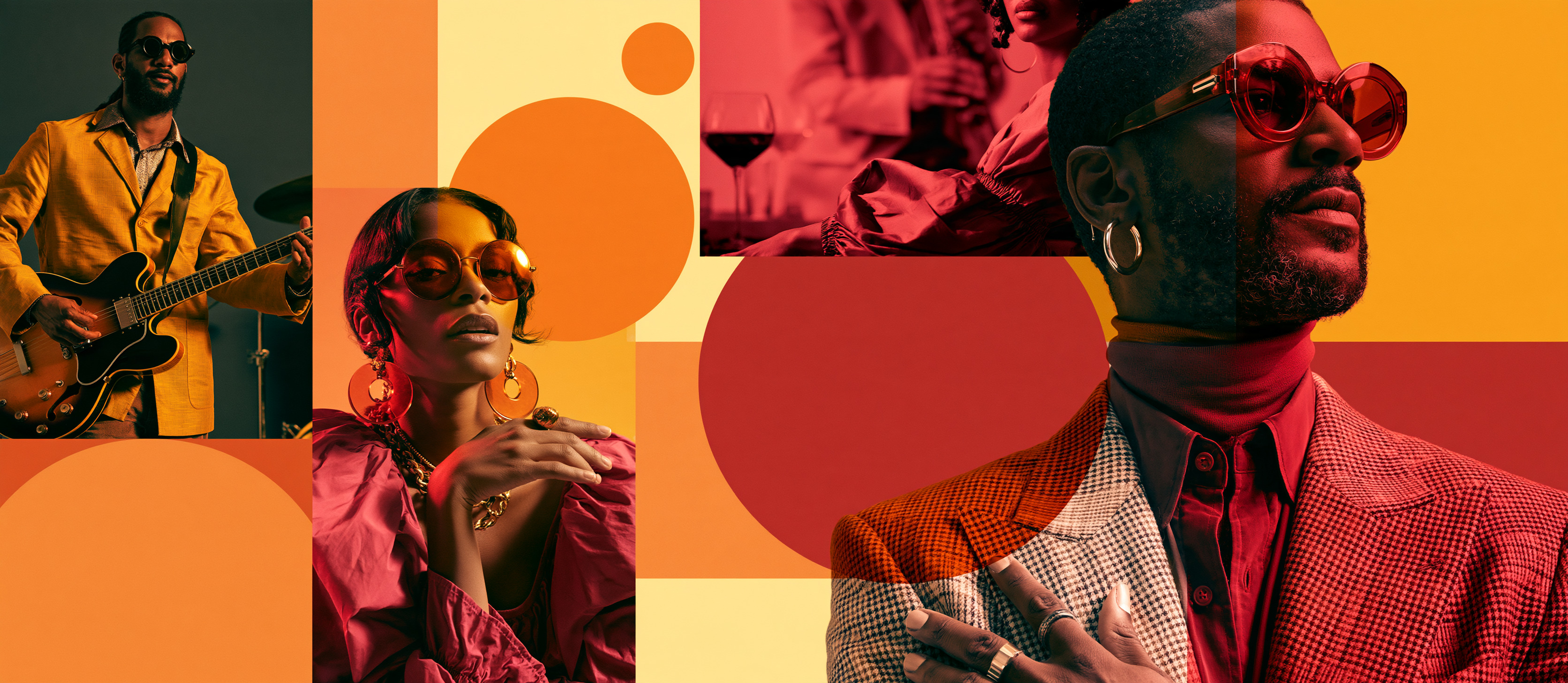
The Trend Radar 2026 positions calm as the new status symbol. The report describes experiences designed to offer cognitive rest and emotional comfort, and states that in an overstimulating world, creating pauses becomes a competitive advantage. In Brazil, Natura’s space in the VIP area of Rock in Rio 2024 featured relaxation and massage areas to invite presence, according to Promoview.
In retail, Quiet Hour initiatives apply the same principle to sound. Salvador Shopping launched in 2023 a monthly hour, on the first opening slot of the last Saturday of the month, with background music turned off, flashing lights off, and dimmed lighting.
At the Chilean chain Unimarc, the practice happens every day, from 3 PM to 4 PM, across 222 supermarkets. These projects were born from the inclusion of people with autism and their families, and they prove that reducing stimulation is a design decision, with method and team training. Silence, in this context, is composition: the absence of music has a time, a duration, and an intention. For the customer, the effect shows up as relief; for the store, it shows up as longer stays.
How is Zanna Sound contributing to this experience race?
A recent example is the project developed by Zanna Sound for Gela Boca, a brand with a presence in southern Brazil and other regions. At the concept store, the Flagship, Zanna Sound took part in creating an experience that went far beyond sonic identity, integrating music, lighting, smoke effects, and other ambient elements to engage customers and transform the shopping experience.
The store’s monthly revenue, which had been R$ 69,000, reached R$ 500,000 after the project was implemented, a leap that reinforces the potential of sensory experiences as strategic tools for retail.
In the race for sensory retail, the store ceases to be merely a point of sale and becomes a point of experience. It is in this territory that Zanna Sound has been expanding its work, connecting Sound Branding, behavior, and brand experience to explore new possibilities for interaction between companies and consumers.
Why does the future of physical retail run through sound?
Spence states that physical stores offer something a screen cannot, as long as the full set of senses feels natural. Brands are already exploring this with listening booths and listening bars, formats that combine focused listening with atmosphere.
Promoview lists Netflix and Spotify with the Graveyard Gala, Audible with listening stations at the Sundance Film Festival, Sol de Janeiro with payphones turned into listening booths, Boticário’s listening bar on Love Day 2024 featuring vinyl and heart rate monitoring, and Heineken’s Single Night Bar in São Paulo in April 2025.
To turn this advantage into a project, four decisions guide good store sound design. The first is tempo: slower beats decelerate foot traffic, and faster beats accelerate it. The second is volume, which needs to allow conversation and respect those who suffer from sensory overload.
The third is congruence: Spence warns that fast-paced music combined with a relaxing scent sends contradictory signals. The fourth is the pause, planned silence as part of the journey.
Sound has always been in the store. What changes in sensory retail is the authorship: someone decides what the customer hears, why, and for how long. At Zanna Sound, that decision is treated as a sound branding and sound design project, with space listening and method.
If your store, showroom, or point of sale wants to create an immersive sensory experience, the first step is to talk to us. Talk to our team and start the conversation.
Next article
Music Branding and the Affective Impact of Sound
Music branding combines music, software, and emotion to create brand experiences. Learn how moods and affective impact shape what audiences feel and choose.
Read more