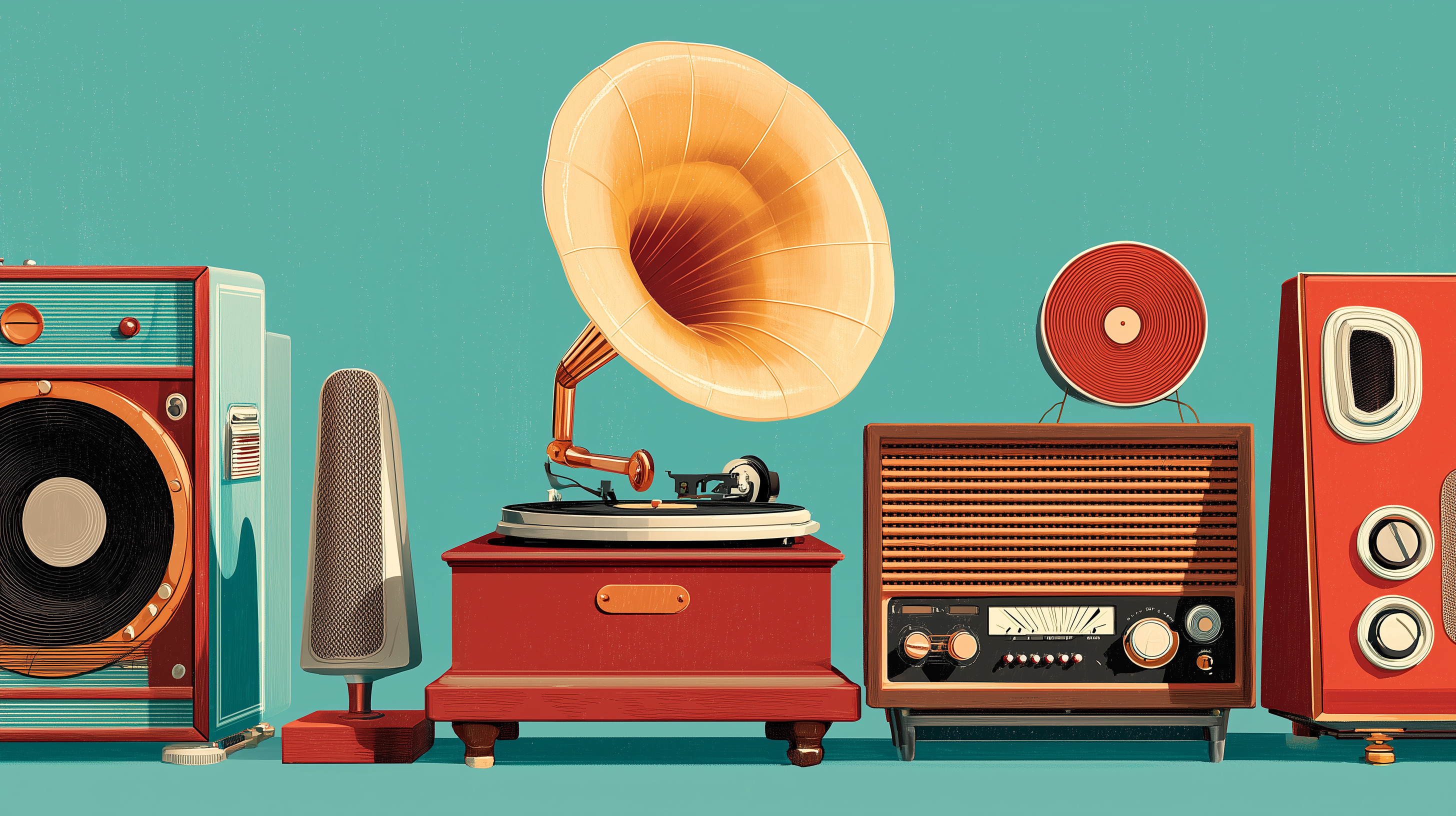
The Evolution of Sound: From Jingles to Sound Branding to Virtual Assistants
Can you recognize a brand just by its sound? Sound Branding has emerged to revolutionize brand communication, becoming an essential and transformative tool for brands that aim to endure. In today’s market, that’s no small feat.
From simple jingles to the complex sonic identities that surround us daily, that’s today’s focus. From early musical ads to the voices of virtual assistants, audio has become a strategic force for creating emotional connections instantly.
This sonic revolution has redefined how brands communicate, establishing a universal language that transcends cultural and technological barriers through sound-powered marketing.
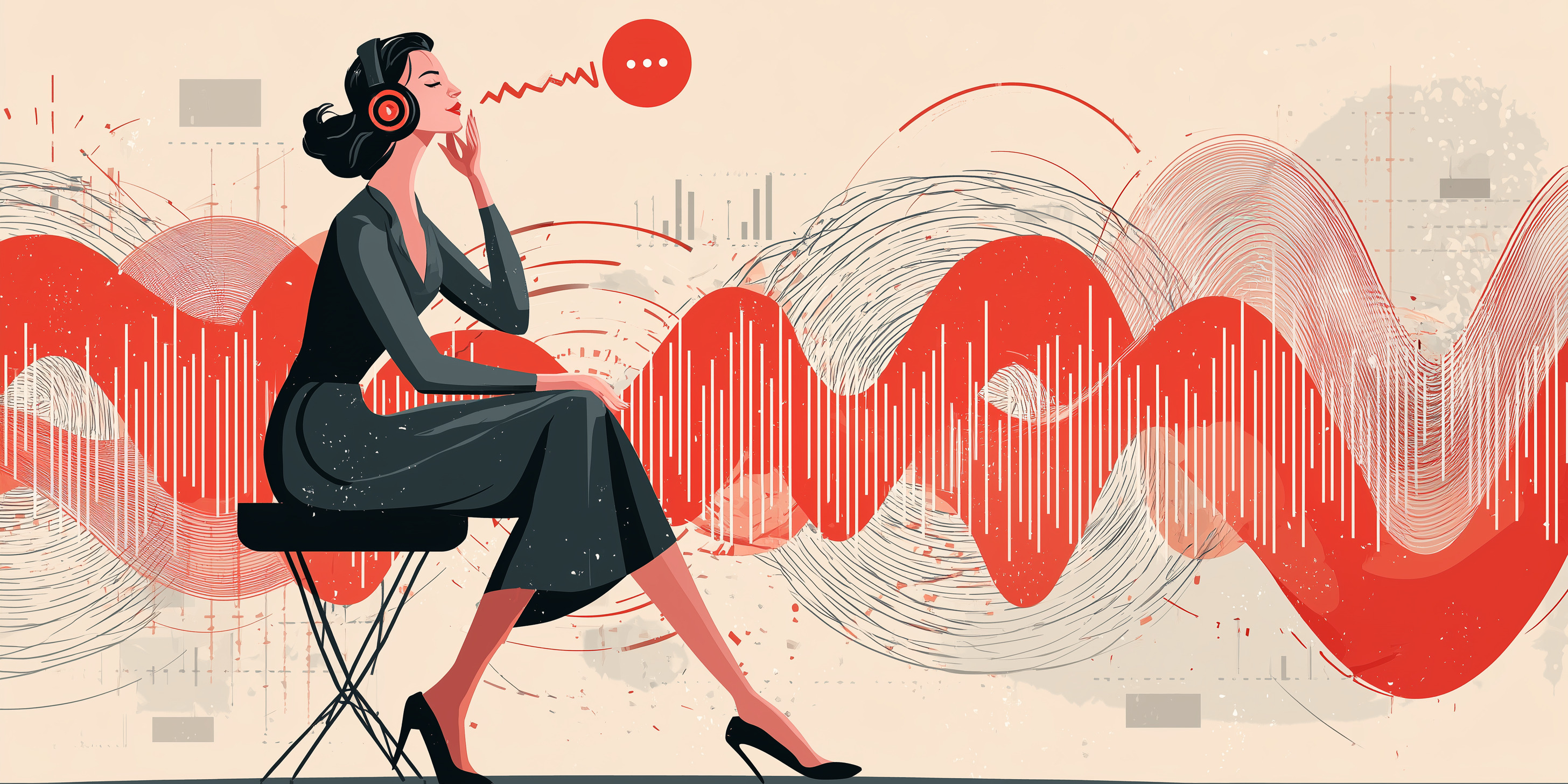
How has sound in communication evolved over the decades, leading to Sound Branding?
Sound has always told stories, but over time, it began to speak for brands. From radio to AI, the evolution of sound in communication reflects cultural, technological, and behavioral shifts, ultimately culminating in Sound Branding.
Those simple, catchy melodies that once sold products in seconds paved the way for more elaborate emotional soundscapes.
Today, sound permeates apps, on-hold systems, virtual assistants, retail settings, vehicle interfaces, ATMs, even healthcare devices, all interwoven across countless applications.
This sensory expansion marks a shift: brands no longer just speak to their audience, they resonate with them. Audio now acts as an invisible bridge between intention and emotion.
More than a marker of brand identity, sound captivates. It shapes atmosphere, kindles memory, evokes emotion. That’s why Sound Branding is no longer a trend but a foundational element of brand identity in contemporary business.
What pioneering role did radio play in the rise of Sound Branding?
The golden age of radio (1930s–1950s) laid the groundwork for modern Sound Branding. Brands discovered that simple, memorable melodies could embed themselves in consumers’ minds.
Radio jingles didn’t just advertise, they became audio logos that lingered long after the program ended.
Companies like Coca‑Cola and McDonald’s heavily invested in distinctive sonic identities, recognizing audio’s unique ability to transcend borders and cultures.
Radio offered an intimate medium—brands could whisper directly into consumers’ ears to forge emotional bonds that print media could not.
How did television evolve music strategies, leading toward Audio Branding?
TV added a compelling visual dimension to sound in advertising, ushering in the era of Audio Branding.
In the 1960s and 1970s, the first televised audio logos appeared and became cultural landmarks. NBC introduced its famous three-tone chime, while Intel’s five-note sonic signature became globally recognized.
Iconic examples that defined the era:
NBC Three‑Note Chime: One of the earliest TV sonic signatures, instantly tied to the network
Intel Inside: Five simple notes elevated an invisible component to iconic status
McDonald’s “I’m Lovin’ It”: A melody that crossed cultures and became universal branding
Globo’s “Plim Plim”: A concise, memorable sound that became synonymous with the network in Brazil
What impact did the digital era have on Audio Marketing?
The digital era radically expanded Audio Marketing. Digital tools allowed creators to explore rich textures, layered effects, and custom compositions, leading to more sophisticated brand sonic identities.
Music production became democratized: brands of all sizes could develop ambient music, sound logos, and thematic soundtracks, once the domain of large enterprises.
Digital audio also enabled seamless integration across platforms, letting brands maintain a cohesive Sonic Identity across web, social, app, and interactive experiences.
How are virtual assistants reshaping Sound UX?
Virtual assistants represent the cutting edge of Sound Branding, where brand identity becomes interactive and conversational.
Major tech brands like Amazon, Google, and Apple invest deeply in branded voice personas that embody personality and values. Their Sound UX designs turn functional interactions into emotional touchpoints, strengthening user-brand bonds.
Modern brands must think holistically about both how they sound and how they speak. Amazon’s Alexa, for example, is crafted to sound warm and trustworthy, reflecting values of innovation and accessibility. Every confirmation tone, transition, and moment of silence is orchestrated to reinforce a cohesive brand experience.

Practical examples of brand audio evolution
Spotify: Delivers a dynamic, personalized musical identity through curated in-store playlists reflecting both brand and listener
Netflix: The iconic “tu‑dum” instantly evokes quality entertainment, perfectly aligned with streaming culture
From jingles to Sound Branding, and now virtual assistant-driven experiences, audio has become a foundational strategic tool for building unforgettable brands. This evolution reflects not only technological advancement but a deeper appreciation of sound’s emotional impact.
Brands that embrace strategic sonic branding build cohesive sound ecosystems across every digital touchpoint. With AI and immersive technology, the future resonates with infinite possibilities.
"One answer for the future of brands is: Sound Branding. But beyond brands, one answer for the future of the world is: Sound!"

Curious to explore Sound Branding or sonic identity further? Contact us and discover how Sound Branding can amplify your brand’s reach and coherence.
Next article
The Shadow in Music: Diddy’s Empire and a System That Erases Identity
Por trás da fama em Hollywood, há um sistema cruel que apaga identidades e lucra com o controle e a humilhação de artistas.
Read more