
The Planetary Sound Network: How Collective Sound Influences the World Frequency
Plato's music of the spheres
The idea that the Universe is governed by sound is not new. In texts attributed to Plato, we find the concept of the music of the spheres, which suggests that the movement of celestial bodies would produce a kind of universal harmony. More than a metaphor, this idea spans centuries and can now be reinterpreted through contemporary concepts of sound vibration and perception.
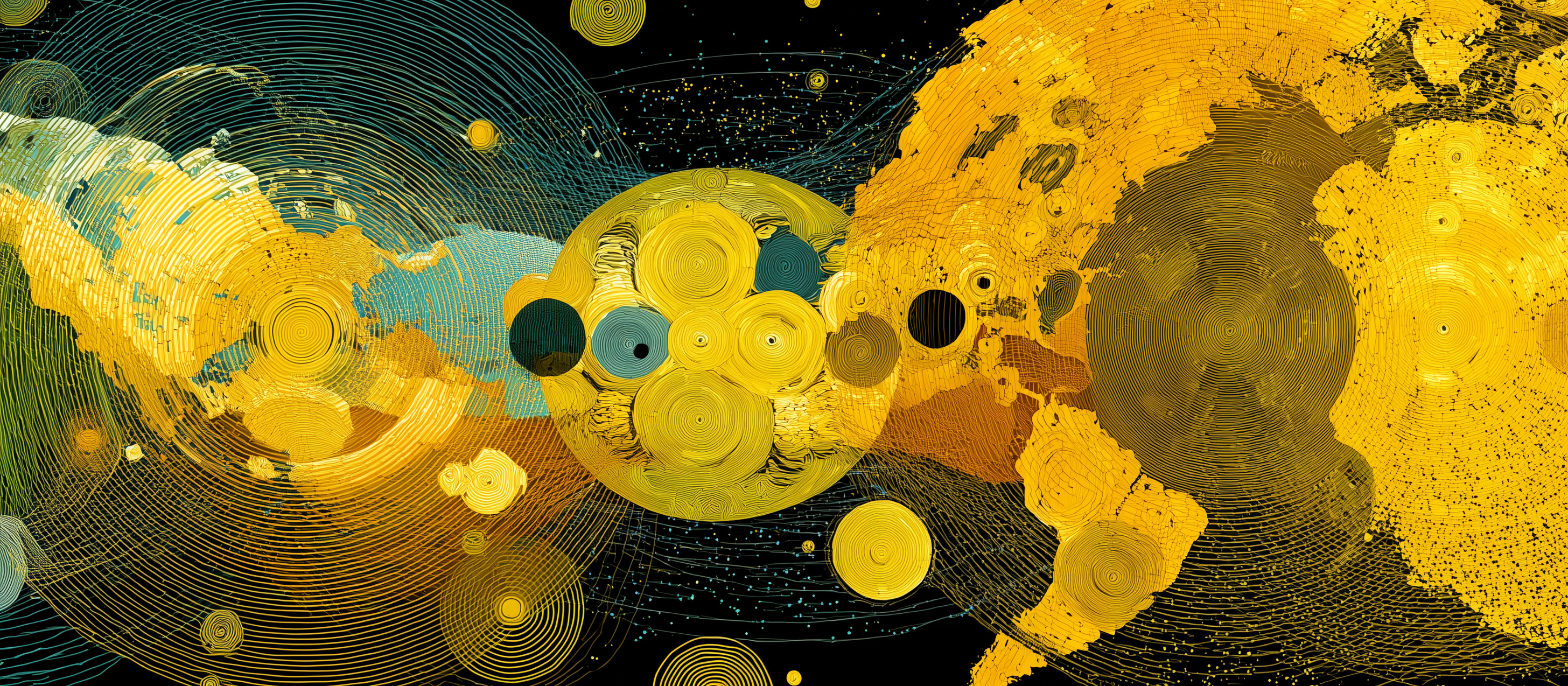
If we expand this reasoning, it is possible to imagine the planet as a vast acoustic field, where different cultures, languages, and sound systems coexist and overlap. This is where the idea of a planetary sound network emerges, an invisible system formed by the sum of all sounds produced in the world.
What is the planetary sound network?
If every country has its own language, music, urban sounds, and communication systems, then the combination of all these elements forms a global sonic layer. This layer encompasses everything from cultural rhythms to voices, announcements, interfaces, and everyday sounds that permeate the human experience.
This concept is closely related to what the literature calls a soundscape, a term developed by R. Murray Schafer, which defines the acoustic environment as a fundamental part of how we perceive the world.
When we think on a global scale, this soundscape is no longer local, it becomes continuous, dynamic, and interconnected.

The planet as a sound frequency system
From a physical standpoint, sound is a mechanical wave that propagates through vibration. This phenomenon is directly linked to the concept of sound frequency, which determines how many oscillations occur within a given period.
A simple way to understand this is through the analogy of a radio. When the frequency is not properly tuned, the result is noise. When there is alignment, the information becomes clear. This logic can be extended beyond physics and applied to the way we experience the environment around us.
Sound and collective behavior
Studies in neuroscience show that sound directly influences emotional states, attention, and the way we make decisions. This effect can be observed in the relationship between music and emotion.
Disorganized sound environments tend to increase stress and create a sense of confusion. Harmonious and intentional sound environments, on the other hand, promote clarity, comfort, and orientation. When we expand this logic to a collective scale, a relevant hypothesis emerges: the sum of sonic experiences can influence behavioral patterns on a large scale.
This point connects directly with reflections already explored by Zanna Sound on the impact of sound on perception.
Cultural influence on the planetary sound network
Each culture contributes its own sonic signature. Brazilian music, for example, combines harmonic complexity with an expansive rhythmic quality. K-pop brings precision and highly controlled production, while hip hop carries narrative and social discourse.
These different expressions do not merely coexist, they form a global acoustic mosaic. The planetary sound network is, therefore, a living system in constant transformation, shaped by cultural exchange and communication technologies.
The role of Sound Branding in this network
If brands, cities, and systems also produce sound, then they are part of this network. Sound Branding emerges as a way to organize this sonic production strategically, creating consistency and identity.
Beyond communication, sound structures experiences. It guides, signals, welcomes, and creates memory. This concept has already been explored in depth in other content by Zanna Sound.
When applied consistently, sound is no longer a detail, it becomes part of the environment.

Sound frequency, repetition, and pattern
There is an important aspect to how sound operates. Sonic patterns tend to repeat, and in doing so, they influence behavior. Environments that reinforce chaotic stimuli tend to generate disorganization, while environments with coherent stimuli tend to create order.
This repetition is not only perceptual. It becomes structural in the way people relate to space, time, and the experiences around them.
Sound as a tool for transformation
If sound influences perception, emotion, and behavior, then it can also be used intentionally. The way we speak, the music we consume, and the sound environments we create are all part of this system.
The planetary sound network is continuously created and sustained by individual and collective choices. Every sound contributes to this invisible layer that shapes the human experience.
To think about sound in this way is to understand that it is not merely a support for communication. It is structure. It organizes experience, influences perception, and can transform the way we live.

If this topic on the planetary sound network resonated with you and you want to understand how sound can be used strategically to build perception and connection through Sound Branding, get in touch.

Next article
The Sound Revolution in Public Transit Through Sound Branding
How sound branding transformed public transit, turning functional announcements into a brand strategy that creates connection with passengers.
Read more