
The Sound of Great Leaders’ Voices That Move the Masses: Pope Francis!
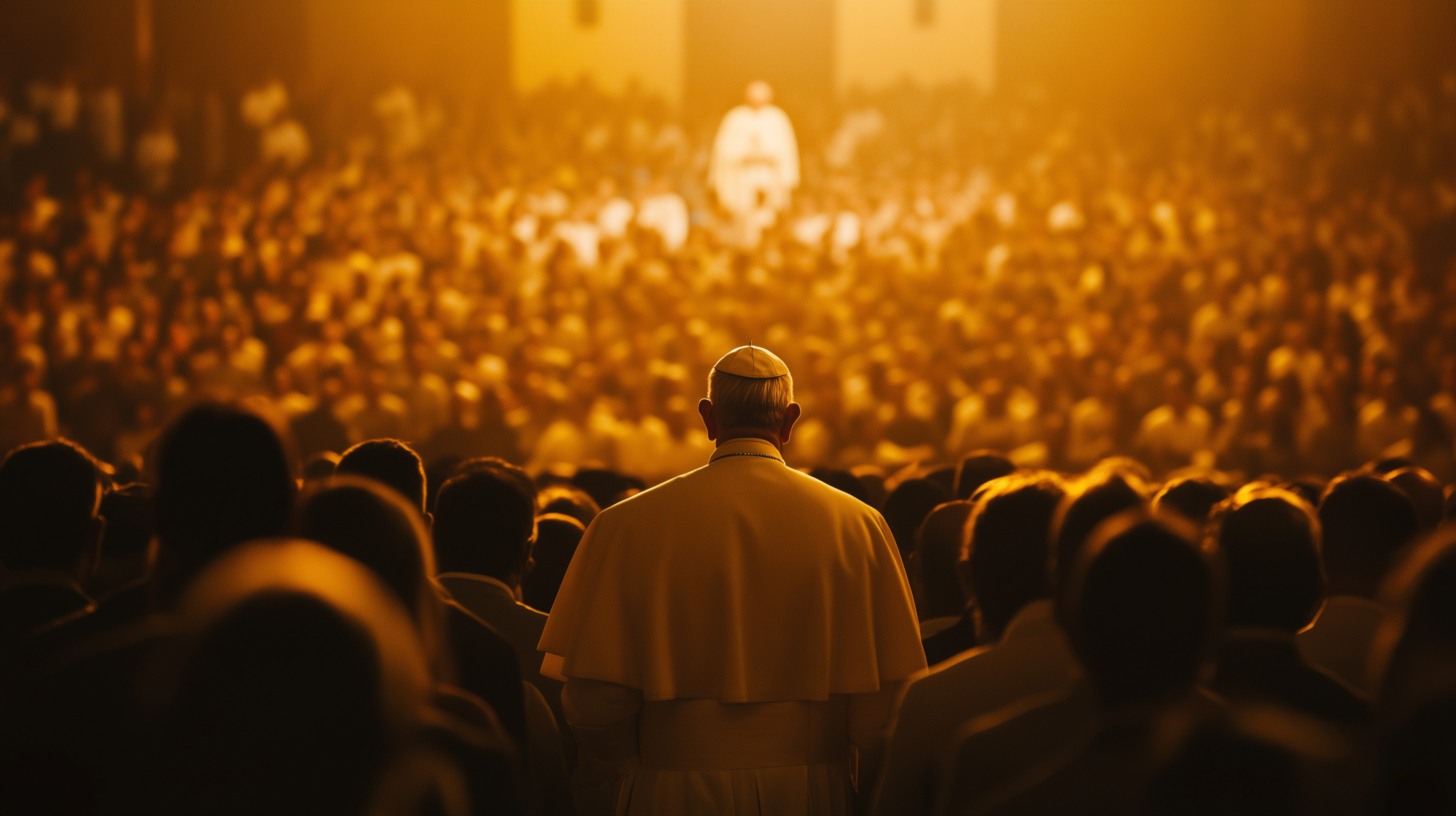
The sound of the voices of great figures throughout history has the power to move the masses—and above all, to shape our beliefs. Pope Francis’s voice had that quality, reinforced by his example of empathy, equality, and fraternity. A guide may point the way, but is that alone enough? Perhaps it’s time we discover the sound of our own voice.
The Japanese scientist Masaru Emoto became known for his experiments on the sonic memory of water. He froze drops of water exposed to sounds—including the voices of famous figures—and the results were surprising. After photographing the formed crystals, Emoto claimed that harmonious voices generated symmetrical and balanced crystals, whereas harsh, high-pitched voices using negative words resulted in distorted formations.
His research inspired many in the field of vibrational consciousness—especially those of us who study the power of sound in transforming awareness. He left us with a valuable insight: the sound of our voice does, in fact, affect the world, others, and the Universe itself, since we are part of an infinite and interconnected network.

What Shape Would the Crystals Take from Pope Francis’s Voice?
If we were to imagine what crystals might form from the sound of Pope Francis’s voice, we could say that his calm, mid-low tones—his intention behind his words, his choice of language, his vibration—would undoubtedly create beautiful, harmonious crystals.
As a contrast, do you recall the sound of Hugo Chávez’s voice? In addition to shouting and speaking in a higher pitch, he made lengthy pauses throughout his speeches—a calculated strategy to generate tension, anticipation, and keep the audience’s attention.
Another well-known case was Masaru Emoto’s analysis of “Hitler’s voice.” When water was exposed to words of violence and hatred, such as Hitler’s, the crystals would form in chaotic, incomplete, and distorted patterns. This stood in stark contrast to the symmetrical and elegant crystals created when water was exposed to words like “love,” “gratitude,” or names of people associated with peace, such as Mahatma Gandhi.
These images moved many people not only for their visual beauty but also for what they symbolized: the idea that the vibration of the voice, through human words and intentions, can influence the structure of matter.
Why Is It So Compelling to Hear the Voices of Certain People?
These voices have guided us for centuries, and they’ve certainly played an important role in our development. But we find ourselves at a turning point, a moment of transition. Don’t you agree? What if moving forward in this “game” requires learning to tune our own voice?
We’re constantly searching for answers outside ourselves: in leaders, gurus, religions, governments, celebrities, parents, friends. But this mechanism often prevents us from listening to our own voice. And it’s not just about sound—first, we need to create space for our traumas, discomforts, and crises. We must enter these often-hidden places in order to clear our inner garden, nourish our soil, and grow the kinds of fruit that reflect who we truly want to become.

How Do We Tune the Sound of Our Own Voice?
Once we’ve done the inner work of recognizing and welcoming our pain, we can begin to explore the sound of our own voice:
1. Volume of the voice – Have you noticed that we tend to distance ourselves from people who speak loudly? It intrudes, disrupts, interferes with our energy. It’s important to calibrate both the volume of our voice and the volume of our listening. Those who speak too much don’t listen—and communication is about both speaking and hearing.
2. Frequency of the voice – Beyond volume, the frequency—whether high or low—also influences our entire system. Very high-pitched voices can irritate us because they are out of tune with the frequencies that foster creativity and flow. Have you ever received feedback about your voice? How have you been speaking lately? More high-pitched? More resonant? We suggest exploring your lower registers—they can help soothe your listener.
3. Content of the voice – You know that friend who always seems to know everything and rarely engages with what you’re actually saying? Communication is about exchange, not monologue. Activate your listening and try to interact by acknowledging what the other person is sharing.
4. Words of the voice – Some words simply sound off when spoken by certain people—they strike a nerve, don’t they? Now imagine the impact on the water crystals inside our bodies. Choosing words that create positive effects—words that foster understanding instead of conflict—is another key to ensuring our voice produces the effect we intend.
Our voice, our rhythm, our frequency together form our sonic identity. And when we choose to vibrate at a higher level, something shifts within. The system we live in is a collective mirror of who we are—and how we sound through our voice. We have the creative power to transform and build new realities.

What Lies Behind Our Voice?
Our consciousness—which, in most cases, is shaped by others’ beliefs. Pope Francis is certainly worth listening to, as are many others who inspire us. But we must also be aware of how those voices resonate within. It’s essential to filter them through our own internal lens so that we can decide what aligns with our time and values, enabling us to create new thoughts, emotions, structures, and projects—and allow our voice to truly come from within.
No higher being is going to be born to save us. We are the ones we’ve been waiting for—the protagonists of our own story.
Spiritual leaders like Pope Francis inspire us with their strength and coherence between words and actions—between thoughts and emotions. His voice will echo eternally in the collective human memory as a reminder of how revolutionary it can be when each of us awakens the consciousness that resides behind our voice.
Enjoyed this topic? Want to learn more about sound-related themes? Stay tuned to the Zanna Blog

Next article
The Invisible Connection Between Voice and the Manifestation of Reality
What does physics explain about frequencies and how our word's vibration, through our voices, relates to the invisible architecture of our daily lives?…
Read more